About

Tata Steel’s journey to green steel is not only about decarbonising processes; it’s also about healing and enriching the ecosystems we touch – from reclaimed mines that become biodiversity parks and urban forests to restored mangroves and community-managed green corridors. The Company has committed to achieving Net Zero emissions across its operations by 2045, aligned with the Tata Group’s Project Aalingana, underscoring a clear and ambitious commitment to long-term sustainability leadership. Tata Steel’s ESG Goals include covering key raw material, steelmaking and downstream facilities across the Tata Steel Group under Biodiversity Management Plans by FY27 and investing in at least one Nature-based Solutions project by FY27.

As a responsible corporate citizen, we are committed to contributing to achieving Sustainable Development Goals (SDGs) through our operations, products, people, and community welfare practices. We have also prioritised 15 SDGs, including the goals of addressing life on land and climate action. The Company actively pursues efforts towards restoration of degraded lands (muck dumps, quarry areas, disturbed land) into biodiversity parks, nature trails and urban forests around
Jamshedpur and other locations.

Since 2013, we have also collaborated with national and international organisations, such as the International Union for Conservation of Nature (IUCN) and the India Businesses and Biodiversity Initiative (IBBI), to encourage transformational and demonstrable change at the Company and
at the sector level.
Sure, we make steel.#WeAlsoMakeTomorrow

INITITATIVES

Green Cover Enhancement
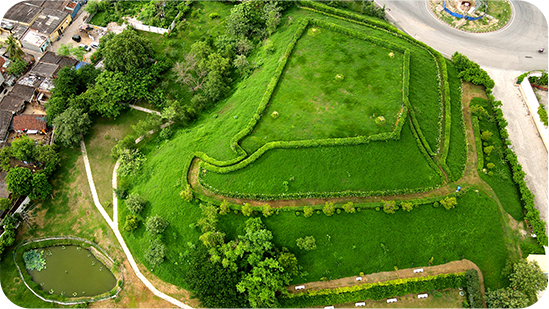
Tata Steel has regenerated the 100-hectare Kakudia Dump of the Sukinda mine in Jajpur, Odisha, through the standard operating procedure for reclamation and rehabilitation involving scientifically engineered process of afforestation.
Regenerated forest of Noamundi across 311 acres and a successfully restored 62-acre Jugsalai muck dump formed due to dumping cinder and slag.
Tata Steel Kalinganagar successfully achieved 33% green cover inside its works area.

Biodiversity Conservation
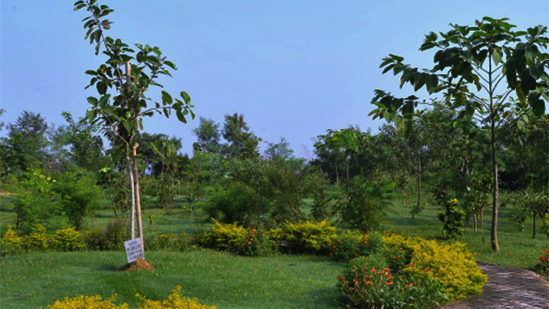
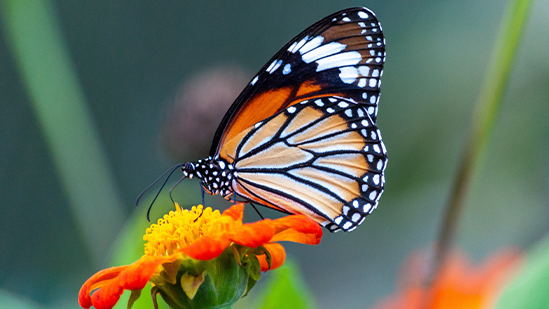
We have converted dump yards into parks, which are now home to thousands of species of flora and fauna. By turning reclaimed mines into dense plantations, we have provided homes to various birds and butterflies.

Eco-restoration & Reclamation
We aim to join hands as a community and support the UN Decade 2021-2030 for #EcosystemRestoration by preventing, halting and reversing the damage.
We have also developed Miyawaki forests across prominent locations.
In West Bokaro, we undertook the reclamation of 100 hectares of the mined-out area at Poundland and created the Sir Dorabji Tata Biodiversity Park. The park aims to improve its aesthetic value by adding a Butterfly Park, Hibiscus Park, Medicinal Park, Species Garden, Reptile Niche, Mughal Garden, Rock Garden, and water reservoir.
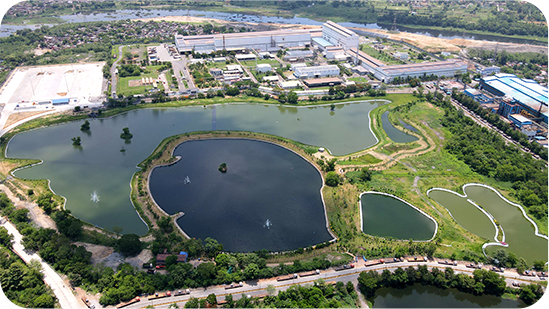
Transformed ~25 acres of Ash mound area into a Biodiversity Park at Tata Steel Meramandali incorporating a variety of diverse features including the Butterfly Park, Reptile Mount, Bamboo Tunnel,
and Medicinal Herb Garden.

Water Conservation
At the Kalinganagar site, our water conservation efforts have led to zero effluent discharge.
Created rainwater harvesting structure of more the 1 lakh cubic metres capacity across TSK and NINL plants for promoting water circularity.
In West Bokaro, we have converted the mined-out pit into a rainwater harvesting structure that can hold around 1,250 million gallons of water and has a catchment area of 152 hectares. The water is used for mining and allied activities and recharges the area's groundwater table.
To promote water security of key steelmaking sites, we have conducted river basin studies of Brahmani and Subarnarekha rivers to facilitate development of relevant basin-specific stewardship interventions.
Tata Steel implemented IoT based Smart Water Management System at the Athagarh Ferro Alloys Plant to optimise water usage, minimise wastage, and ensure sustainable water management practices in its mining operations.

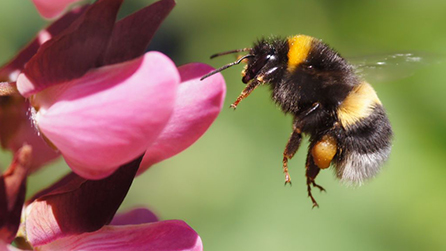
Tata Steel UK is actively enhancing biodiversity, most notably achieving The Wildlife Trusts' Biodiversity Benchmark at their Shotton site, which hosts a significant common tern colony. Their initiatives include developing Biodiversity Management Plans for sites and contributing to local wetlands, aiming to balance industrial activities with environmental conservation, including the use of local bees for pollination.

Integration of SSSI (Site of Special Scientific Interest): Habitat protection and enhancement aligned with UK environmental norms.

At Tata Steel Nederland, biodiversity protection is woven into a broader environmental transformation – from Roadmap Plus projects that cut dust and heavy-metal fallout around IJmuiden to the Green Steel Plan that replaces coal-based blast furnaces with cleaner DRI–EAF routes, all under a global commitment to complete biodiversity risk assessment of IJmuiden and other operational sites in the Netherlands by FY27.

RECOGNITIONS

Tata Steel Thailand has received ESG recognition from the Stock Exchange of Thailand (SET), including ESG DNA recognition (2025), for its sustainability performance. TSTH’s environmental conservation and biodiversity projects aim to integrate Tata Steel Group’s Biodiversity Policy with the Thai context.

Tata Steel published its inaugural TNFD (Taskforce on Nature-related Financial Disclosures) report for disclosing the nature-related impact, dependencies, risks and opportunities of its India business in 2025.

Tata Steel successfully completed the mid-term evaluation of Sukinda Ecorace Project as a Nature-based Solution using IUCN’s Self-Assessment tool (SAT) which was later verified by IUCN.

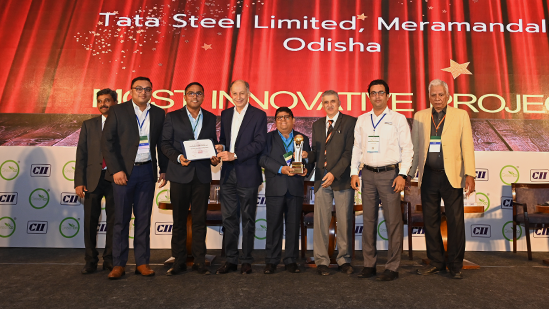
Tata Steel Meramandali has received the prestigious Confederation of Indian Industry National Award for Environmental Best Practices 2023.

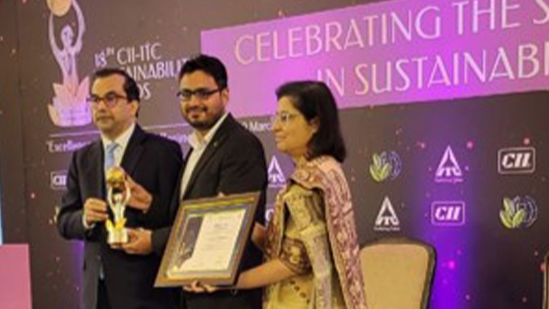
Tata Steel's Noamundi iron was awarded the Excellence in Biodiversity Management award at the Confederation of Indian Industry (CII) ITC Sustainability Awards 2023.

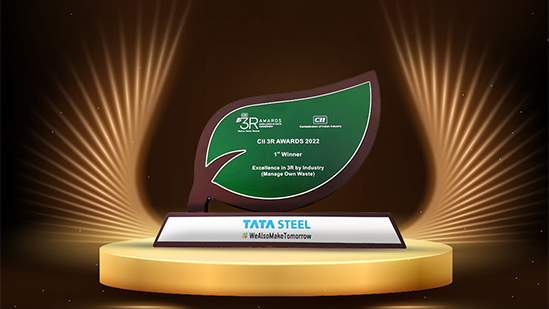
Tata Steel was declared the Winner of the Excellence in 3R (Reduce-Reuse-Recycle) by Industry (Managing Own Waste) award by the CII International Conference on Waste to Worth 2022.

Tata Steel's Noamundi Iron Mine is a 7-star rated, and the Joda East Iron Mine and Khondbond Iron and Manganese Mine are 5-star rated mines recognised by the Ministry of Mines, Government of India, in recognition of their extraordinary efforts in the field of scientific and sustainable mining.

Did you know?

Today, more than 163,000 species are on the IUCN Red List globally, with more than 45,300 species threatened with extinction.

The World Bank estimates that nearly 10 million square kilometres of forests have been lost since the beginning of the 20th century.