About

Tata Steel is progressing towards Net Zero by 2045 through a multi-route, low-emission steelmaking strategy across geographies through various technology interventions. Tata Steel is steadily shifting from traditional routes to a portfolio of recycling, low-carbon and future-ready ironmaking technologies that can scale over the next decade. The transition is imperative for minimising environmental impact wile promoting economic growth.
Sure, we make steel. But #WeAlsoMakeTomorrow

initiatives

Tata Steel has signed an agreement with Tata Power to source 379 MW of captive renewable power, which will save 50 million tons of carbon emissions over the 25-year contract period.

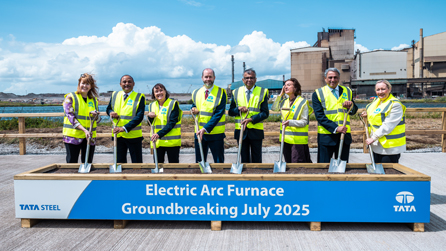
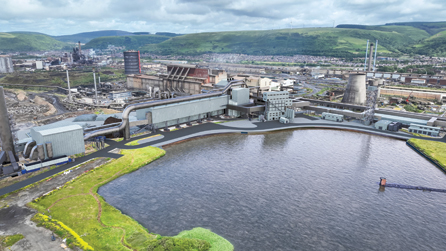
Tata Steel UK has shut down its blast furnace operations in Port Talbot as part of the plan to transition to EAF-based steelmaking. In September 2023, the Company reached an agreement with the UK government to invest in the low-emission steelmaking facility with an investment of £1.25 billion, which includes a £500 million grant from the UK government.

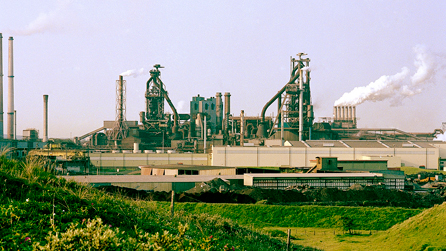
Tata Steel Nederland has submitted its Green Steel Plan to the Dutch government, proposing to replace one of the blast furnaces in IJmuiden with a DRI (Direct Reduced Iron)-EAF facility.

In IJmuiden (the Netherlands), Tata Steel plans to replace one of the blast furnaces with hydrogen-ready Direct Reduced Iron (DRI) and Electric Arc Furnaces (EAF).

Tata Steel has been operating its pilot plant on HIsarna- a low carbon technology for a decade in its IJmuiden plant. We now plan to set up a 1 MTPA demo plant in Jamshedpur.

Tata Steel partners SMS Group to deploy world-first EASyMelt decarbonisation dechnology in Jamshedpur. The project aims to cut CO2 emissions by more than 50 percent compared to the
blast furnace’s baseline operation.

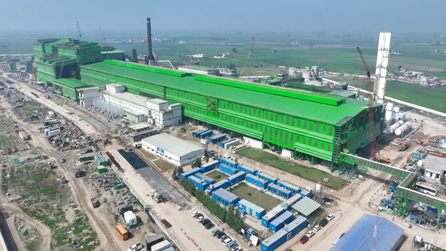
In March 2026, Tata Steel inaugurated its first, state-of-the-art scrap-based Electric Arc Furnace (EAF) plant in India in Ludhiana, Punjab, representing a ₹3,200 crore investment. The plant has a 0.75 million tonnes per annum capacity and is designed to achieve CO₂ emissions less than 0.3 tonnes per tonne of steel.​

In the UK, Tata Steel is investing £1.25 billion, supported by £500 million UK government grant, to transition to Electric Arc Furnace (EAF)-based steelmaking in Port Talbot, aimed at cutting emissions by up to 50 million tonnes over the next decade.

Applications

​Low-emission steelmaking aims to reduce carbon emissions emitted per tonne of conventionally produced steel, which contributes 7%–9% of global anthropogenic GHG emissions.​

Tata Steel became India's first steel company to demonstrate end-to-end capabilities in developing API X65 grade Electric Resistance Welded (ERW) pipes for transporting 100% pure gaseous
hydrogen at high pressure.​

In 2025, we launched India’s first Carbon Bank to offer low-emission products to our customers.

Recognitions

Our Graphene Business won Tata Innovista in 2015

We have also patented Graphene in 10 countries with a total of 40 patents (5 patents in US)
Our Graphene Business won Tata Innovista in 2015

We have also patented Graphene in 10 countries with a total of 40 patents (5 patents in US)

Did you know?

As per the Institute for Energy Economics and Financial Analysis, India's steel sector accounts for 12% of India's greenhouse gas emissions with an emission intensity of 2.55 tonnes of CO2 per tonne of crude steel (tCO2/tcs) compared to the global average of 1.85 tCO2/tcs.

Green steel production reduces the environmental impact of steel production and helps to make it more sustainable.

As per the World Steel Association, renewable energy sources rely heavily on steel and will play a key role in achieving the Paris Agreement target.